

Civil society’s role in the world of work and freedom of association discussed in light of research findings
ANKARA (ILO News) – The International Labour Organization (ILO) Office for Türkiye organized the “Workshop on Civil Society Organizations in the World of Work and Freedom of Association” to discuss the role of civil society organizations in the world of work and issues related to freedom of association.
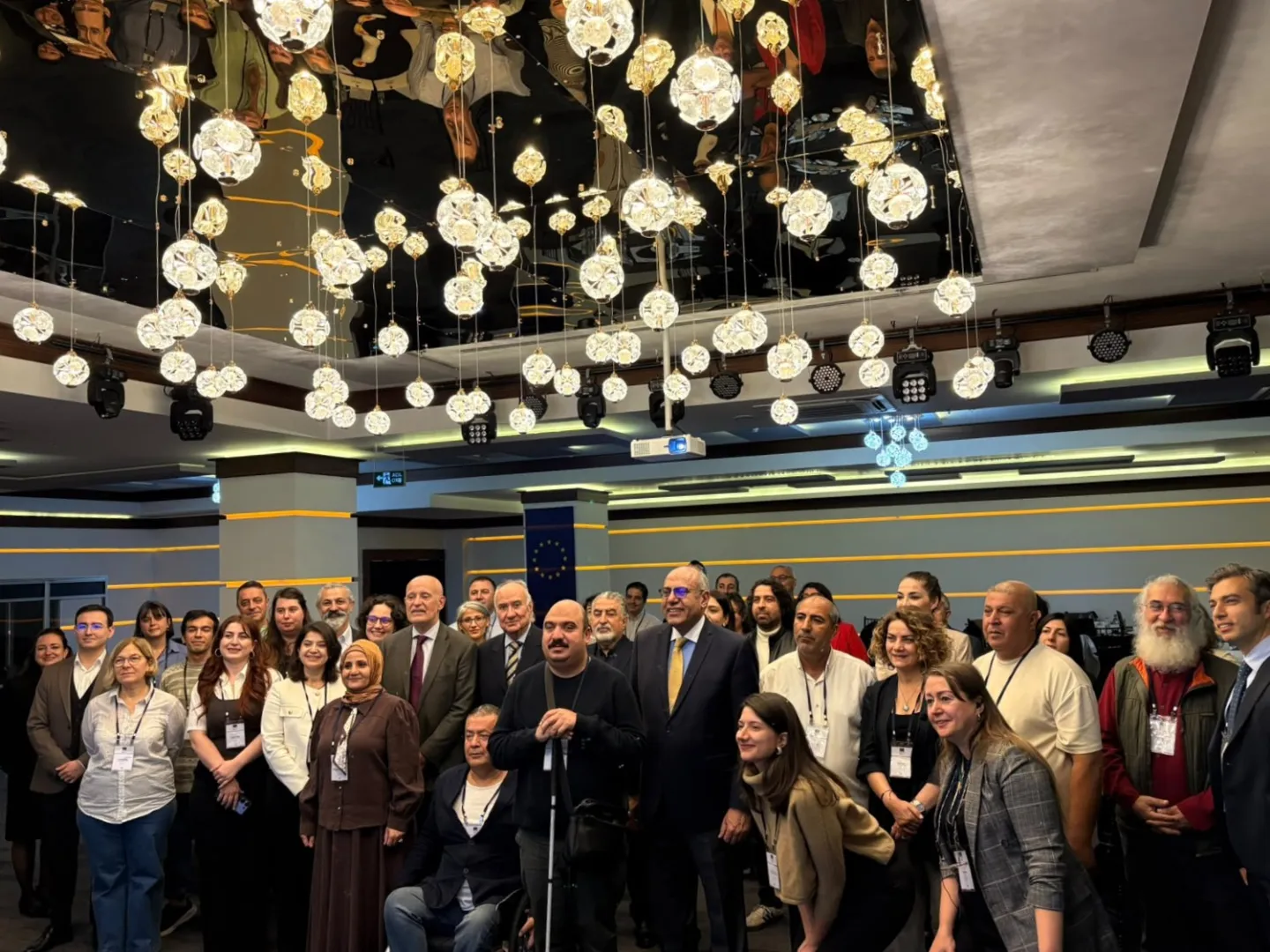
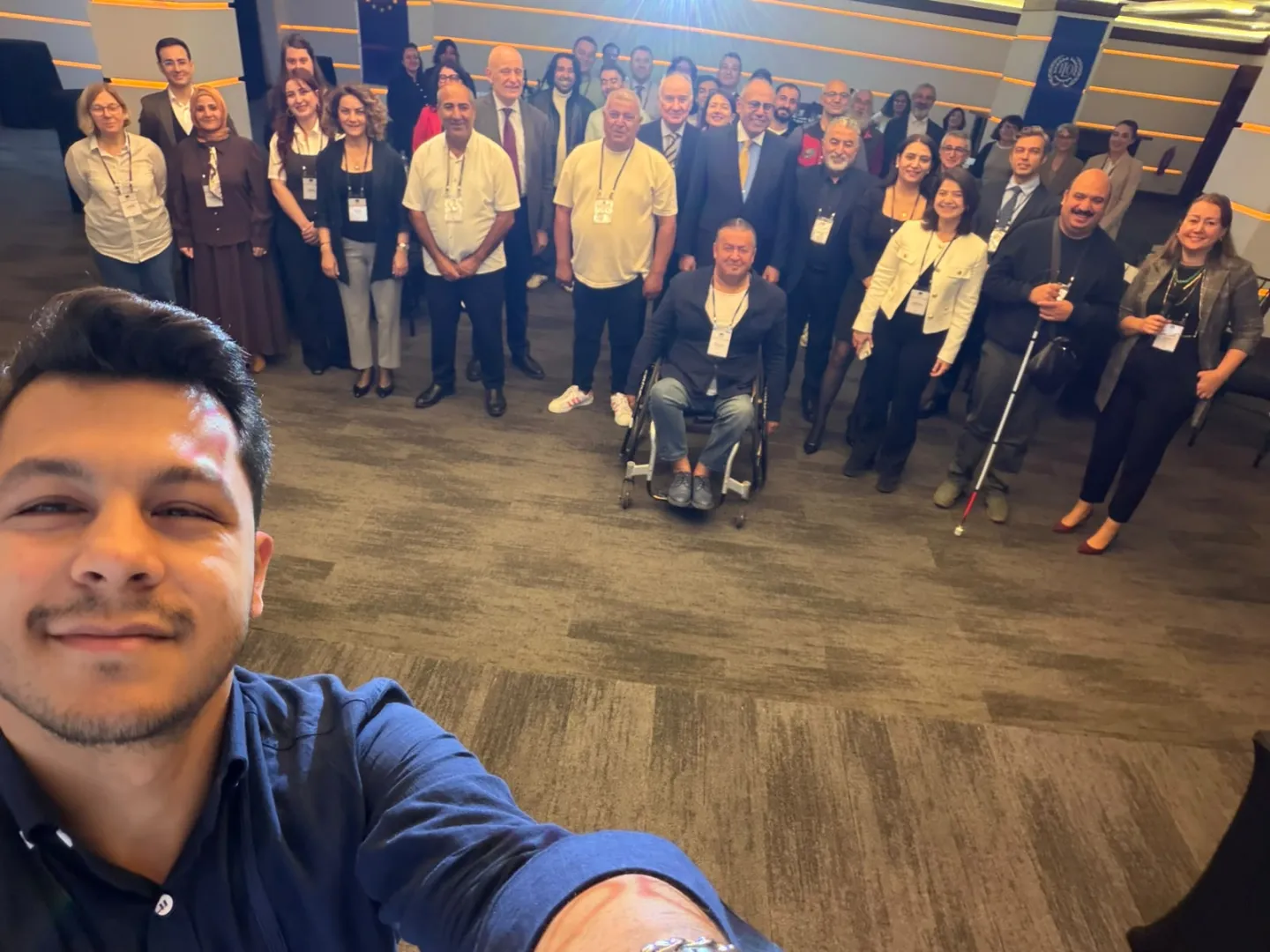
The workshop was organized under the EU-funded project “Strengthening Social Partners and Civil Society Capacities on Fundamental Principles and Rights at Work,” implemented by the ILO Office for Türkiye. It brought together representatives of civil society organizations benefiting from the project’s grant programme and other relevant stakeholders.
© Özge Yeleser/ILO
The workshop was organized under the EU-funded project “Strengthening Social Partners and Civil Society Capacities on Fundamental Principles and Rights at Work,” implemented by the ILO Office for Türkiye. It brought together representatives of civil society organizations benefiting from the project’s grant programme and other relevant stakeholders.
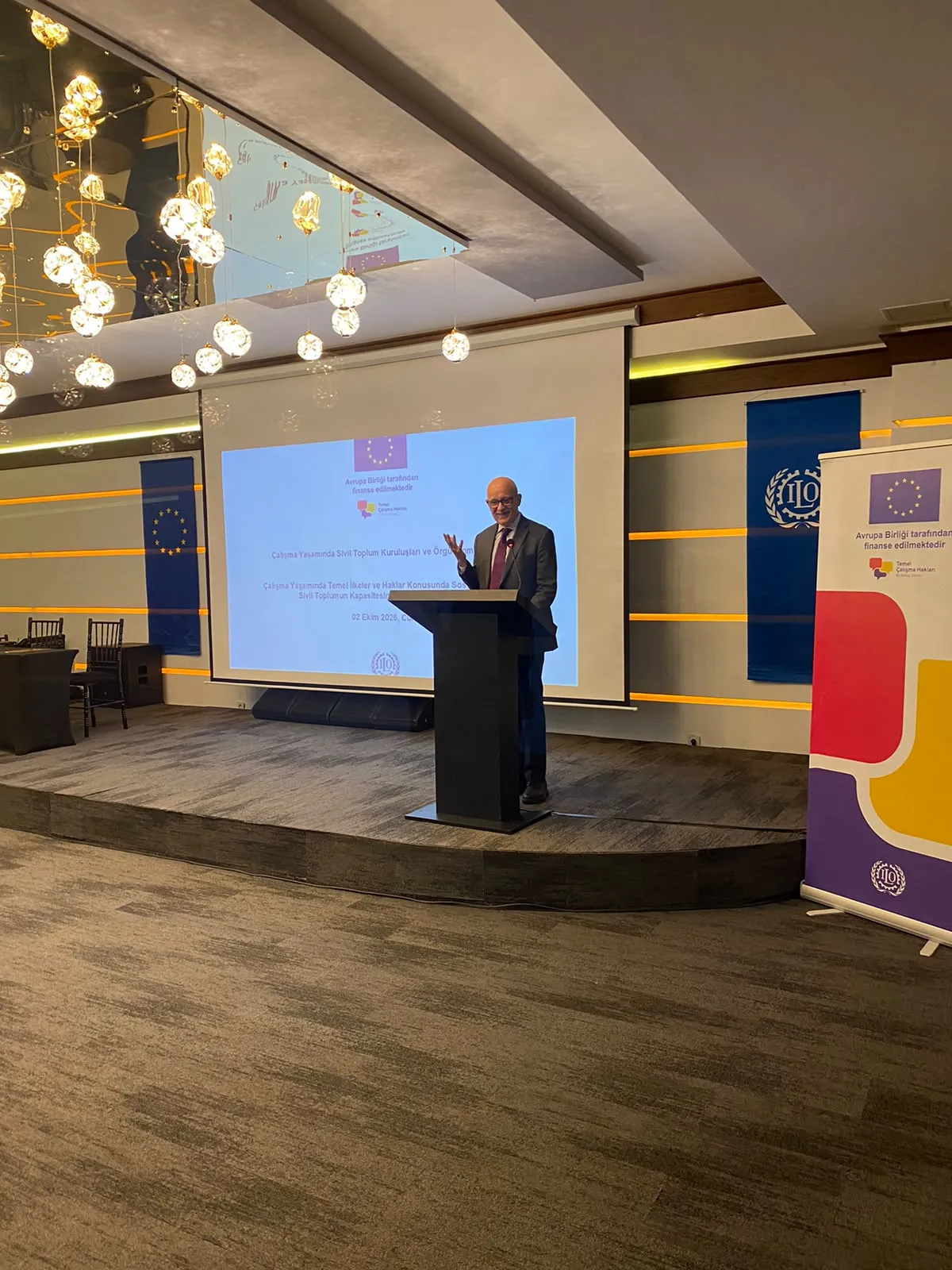
The workshop opened with remarks by Yasser Hassan, Director of the ILO Office for Türkiye, and Jean Barbé, Head of the Civil Society, Fundamental Rights, Judiciary and Home Affairs Section of the Delegation of the European Union to Türkiye.
In his opening remarks, Hassan emphasized the importance of engaging civil society in discussions on the changing world of work and ensuring that diverse perspectives are reflected in the process.
“ILO has long recognized that civil society organizations can make important contributions in support of social justice. They enrich social dialogue. And this is relevant when we are dealing with complex challenges that affect groups whose experiences may not always be fully visible through conventional mechanisms.” he said.
He also highlighted the contribution of civil society organizations within the project which “brings perspectives that are sometimes difficult to capture by working closely with people and communities, as well as experiences and voices of groups that may otherwise remain less visible into broader policy discussions”.
Jean Barbé highlighted the importance of civil society organizations as partners of the European Union (EU), particularly in bringing forward perspectives that may otherwise remain less visible.
“Civil society organizations are key partners of the EU who make realities not often heard visible.”, he said.
© Özge Yeleser/ILO
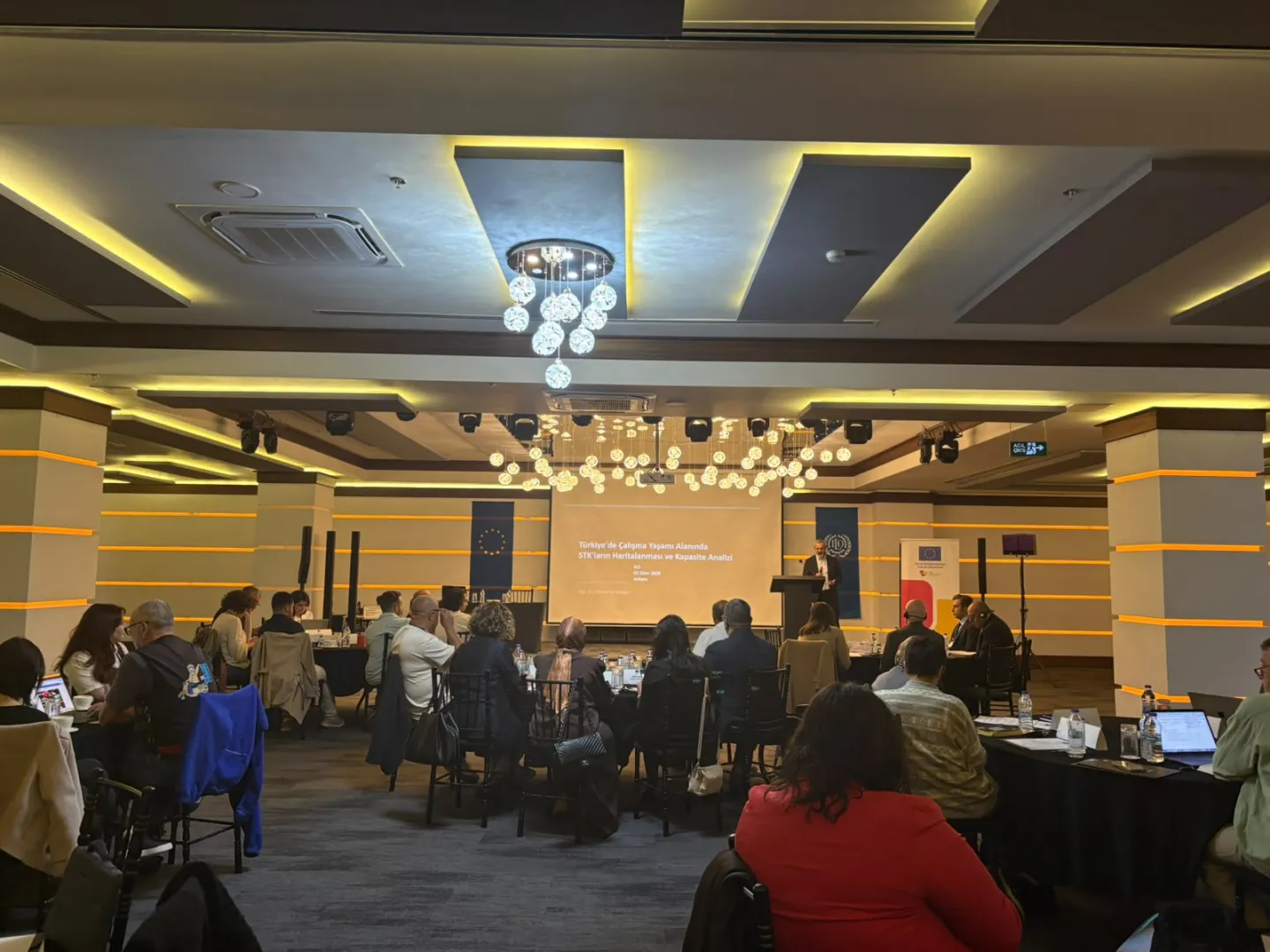
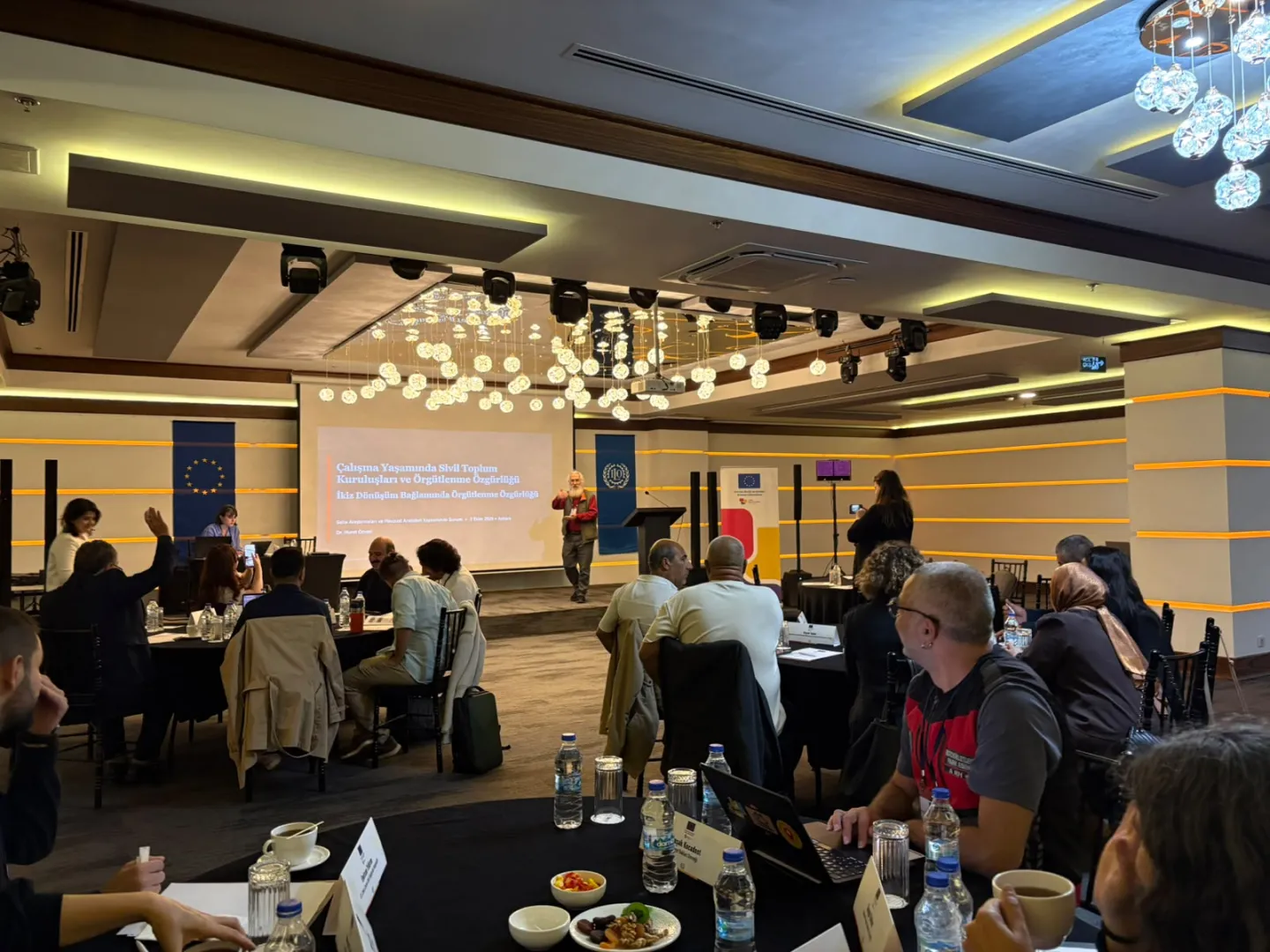
During the workshop, the preliminary findings of two research studies prepared under the project were presented to participants. Associate Professor Emirali Karadoğan presented the findings of the study “Mapping Civil Society Organizations Operating in the World of Work,” while Professor Murat Özveri presented the study “Freedom of Association in the Context of the Twin Transition,” which addresses freedom of association in the context of digital and green transitions.
© Özge Yeleser/ILO
The mapping study highlighted the diversity of civil society organizations operating in the world of work and showed that organizational capacity cannot be assessed through a single dimension. While organizations demonstrate different strengths in areas such as outreach, expertise, research, advocacy and networking, common challenges remain including financial sustainability, human resources, institutional memory, digital security, reaching workers in new and precarious forms of employment, and translating evidence into lasting policy influence.
The second study examined freedom of association in the context of the digital and green transitions, including how changes in the world of work interact with representation, social dialogue, advocacy and institutional engagement.
© Özge Yeleser/ILO
Following the presentations, civil society representatives shared their views, experiences and recommendations, providing valuable input to further refine the research. The discussions also provided an opportunity for organizations to exchange perspectives, learn from one another’s experiences and contribute to a broader understanding of the issues covered by the studies.
Workshop participants highlighted precarious forms of employment as a major concern for the organization and representation of the groups served by civil society organizations. They identified insecure forms of work, including informal, temporary and piece-rate work, as key challenges. Participants also pointed to gaps in legislation and administrative arrangements in addressing the specific needs of some groups, as well as discrimination in working life.
Participants emphasized that strengthening the sustainability and effectiveness of civil society organizations requires attention both to internal capacities and to the broader environment in which they operate, including the legal and regulatory environment as a key external factor shaping civil society action.
© Tugay Aslım/ILO
The research studies will be finalized by incorporating the feedback and contributions received during the workshop. Their findings and recommendations will subsequently be shared through broader stakeholder forums and public dissemination activities.
Legal Disclaimer:
EIN Presswire provides this news content "as is" without warranty of any kind. We do not accept any responsibility or liability for the accuracy, content, images, videos, licenses, completeness, legality, or reliability of the information contained in this article. If you have any complaints or copyright issues related to this article, kindly contact the author above.
