

New OCR FAQs Reinforce What Section 504 FAPE Means in Real-World School Services
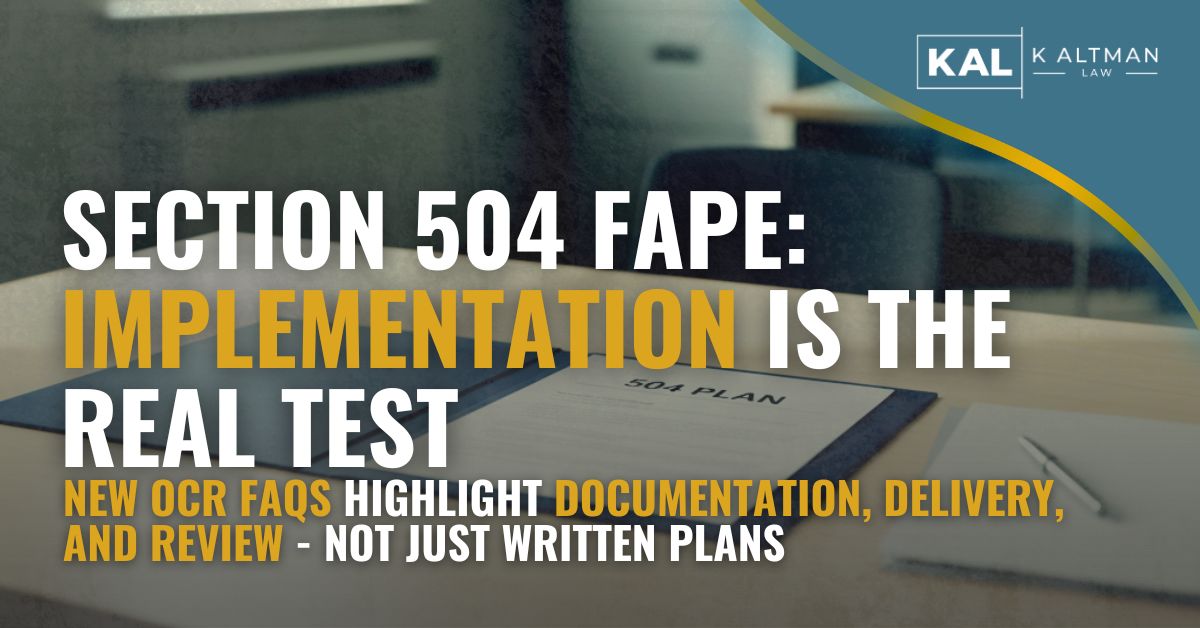
OCR’s updated Section 504 FAQs reinforce that FAPE disputes often hinge on whether accommodations are consistently implemented and documented in practice.

Keith Altman
OCR’s updated Section 504 FAQs clarify how FAPE is measured in practice—and why implementation and documentation drive most disputes.
For families, the FAQs are a practical reference point for common disputes about supports, services, access, and whether implementation is meeting Section 504 expectations.
You can read about it here.
Why this guidance matters:
Section 504 disputes often arise when there is a gap between what a plan says and what a school actually delivers, particularly when needs evolve, or informal workarounds replace consistent supports.
OCR FAQs are not a substitute for individualized legal analysis, but they can clarify how OCR frames “FAPE under 504” and what documentation and process elements schools should be prepared to show.
Implementation is the pressure point:
In practice, many conflicts turn on records: what information the school relied on, what accommodations or services were chosen (and why), and whether implementation is consistent across classes and settings.
Families are typically best positioned when they can document the student’s needs, the agreed supports, and the impact when delivery is inconsistent.
“The most common 504 disputes we see are not about lofty principles; they’re about implementation,” said Keith Altman, Founder and Managing Partner of K Altman Law. “Families are best positioned when they can point to clear documentation of needs, the supports the school agreed to provide, and the impact when those supports are inconsistently delivered.”
What should families and students do now?
• Confirm you have the current written 504 plan and who is responsible for each accommodation.
• Document implementation issues in a simple log (dates, settings, what occurred, impact).
• Request a review meeting if needs have changed or the plan is not working in practice.
• Ask about the district’s Section 504 due-process procedures and timelines if there is a disagreement.
About K Altman Law:
K Altman Law is a national education law firm that advises and represents students, families, and educators in matters involving student discipline, special education (IEP/504), Title IX process integrity, and related civil-rights issues.
The firm works with clients across the United States, with matters often involving both educational policy compliance and high-stakes decision-making by schools, districts, and universities.
Disclaimer:
This release is for general information only and is not legal advice. Outcomes depend on the facts and law in a given jurisdiction, and rules can vary by state and setting.
Keith Altman
K Altman Law
+1 888-984-1341
kalonline@kaltmanlaw.com
Visit us on social media:
LinkedIn
Instagram
Facebook
YouTube
TikTok
X
Legal Disclaimer:
EIN Presswire provides this news content "as is" without warranty of any kind. We do not accept any responsibility or liability for the accuracy, content, images, videos, licenses, completeness, legality, or reliability of the information contained in this article. If you have any complaints or copyright issues related to this article, kindly contact the author above.
